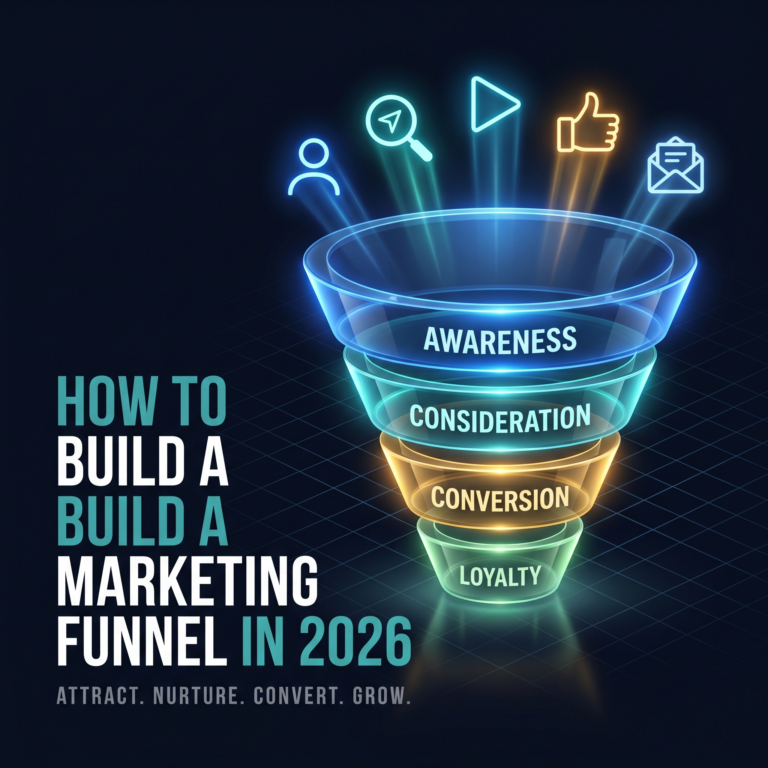
How to Write Blog Posts That Rank.
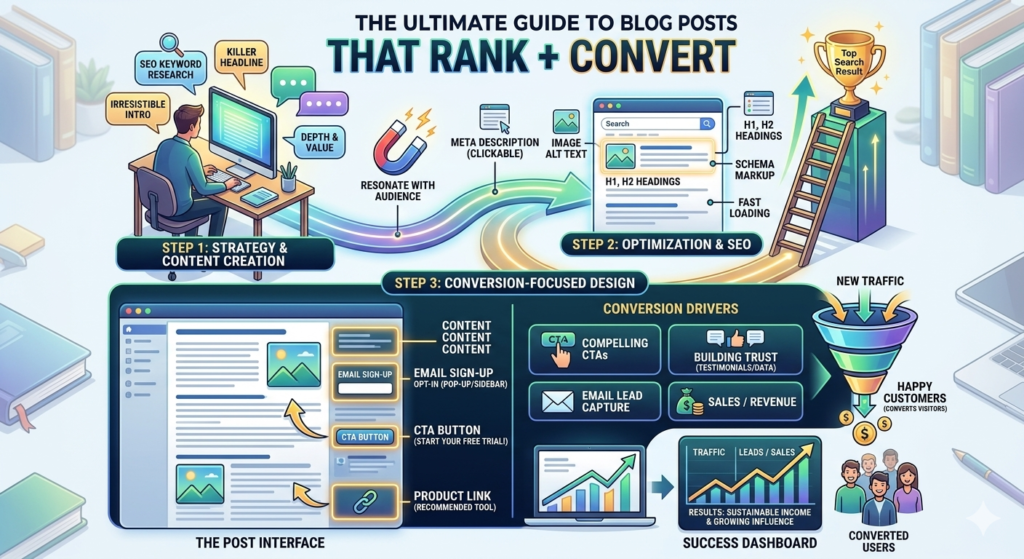
How to Write Blog Posts That Rank + Convert Using Search Intent
Stop guessing what Google wants. Match search intent, satisfy the reader, and turn organic traffic into revenue — with real keyword examples and proven frameworks.
Most blog posts fail because they answer the wrong question. You can have perfect grammar, stunning images, and keyword-rich headings — but if your content does not match what the searcher actually wants, Google will not rank it, and readers will not convert.
Search intent is the bridge between ranking and revenue. This guide breaks down exactly how to identify intent, structure content for it, and turn organic traffic into subscribers, leads, and sales.
What Is Search Intent and Why Does It Control Everything?
Search intent (also called user intent or query intent) is the why behind a search. It is the goal a person has when they type a phrase into Google. Google’s entire algorithm is built to figure out that goal and serve the page that satisfies it best.
If your page satisfies intent better than the current top results, you will outrank them. If you mismatch intent — for example, writing a sales page when someone wants a tutorial — you will stay buried on page three no matter how many backlinks you build.
The Four Types of Search Intent
Every search query falls into one of four categories. Your job before writing a single word is to classify your target keyword into the correct bucket.
| Intent Type | What the User Wants | Keyword Examples | Best Content Format |
|---|---|---|---|
| Informational | To learn, understand, or get an answer | how to start a blog what is seo | How-to guides, tutorials, explainers, list posts |
| Navigational | To find a specific website or page | ahrefs pricing kimi ai login | Homepage, login page, brand comparison landing page |
| Commercial | To research before buying; compare options | best wordpress hosting hostinger vs bluehost | Comparison posts, review roundups, best-of lists |
| Transactional | To make a purchase or complete an action | buy hostinger plan semrush discount code | Product pages, checkout pages, coupon posts |
Pro Tip: Mixed Intent Keywords
Some keywords carry mixed intent. For example, “best running shoes” is mostly commercial investigation, but Google may also show informational guides about how to choose running shoes. Always check the current SERP before deciding your angle. If the top three results are listicles, write a listicle. If they are in-depth buying guides, write a buying guide.
How to Determine Search Intent in 30 Seconds
Before you outline a post, run this three-step check:
- Google the keyword. Look at the top 5 organic results. What content type dominates? Are they blog posts, product pages, videos, or forums?
- Analyze the SERP features. Do you see featured snippets, People Also Ask boxes, shopping carousels, or local packs? These reveal what Google thinks the intent is.
- Read the top result. What question does it answer? How deep does it go? Your post must be more useful, more complete, or easier to follow.
The Search Intent Content Matrix
Ranking brings traffic. Converting turns that traffic into revenue. The matrix below shows you how to do both at once by matching content structure and conversion strategy to intent.
| Intent | Content Structure | Conversion Strategy | CTA Type |
|---|---|---|---|
| Informational | Step-by-step guide with screenshots, table of contents, FAQ section | Build trust first. Offer a related lead magnet or tool. | “Download the free checklist” |
| Commercial | Comparison table, pros/cons, pricing breakdown, video demo | Position your recommendation as the best solution. Use affiliate links. | “Try [Product] free for 30 days” |
| Transactional | Minimal text, strong headline, social proof, clear pricing | Remove friction. Offer a discount or bonus. | “Claim your discount now” |
| Navigational | Direct answer, quick links, brand-focused comparison | Capture the user before they bounce to the brand site. | “Get an exclusive bonus” |
Real Examples: From Keyword to Converting Post
Here are five real-world scenarios showing how to turn a keyword into a post that ranks and converts.
Example 1: Informational Intent
Keyword: how to write a business plan
Intent: The user wants to learn the process. They are not ready to buy software yet.
Wrong ApproachA 500-word sales pitch for business plan software.
Right ApproachA 3,000-word step-by-step guide with a downloadable template. Inside the guide, mention that business plan software can speed up formatting, and link to your recommended tool with an affiliate link.
Conversion Play: Offer a free PDF template in exchange for an email address. Nurture the subscriber with a 5-day email course, then pitch the software on day 4.
Example 2: Commercial Investigation
Keyword: best email marketing software for small business
Intent: The user is actively comparing tools and is close to buying.
Wrong ApproachA generic list of ten tools with no hands-on insight.
Right ApproachA tested comparison of 5 tools with pricing tables, feature breakdowns, and a “best for” recommendation for different use cases. Include your own screenshots and video walkthroughs.
Conversion Play: Use affiliate links for every tool. Add a highlighted box: “Our top pick for beginners is [Tool X] — start a free trial here.” Place a sticky sidebar CTA that follows the reader down the page.
Example 3: Transactional Intent
Keyword: hostinger coupon code 2026
Intent: The user has already decided to buy Hostinger and is looking for the best deal.
Wrong ApproachA 2,000-word history of web hosting.
Right ApproachA clean landing page with the current coupon code displayed in a large box, step-by-step redemption instructions, and a countdown timer for urgency.
Conversion Play: The entire page is the CTA. Every button links to your affiliate URL. Add trust signals: “Verified today,” “Used by 10,000+ readers,” and a screenshot of the discount applied at checkout.
Example 4: Mixed Intent
Keyword: how to start a wordpress blog
Intent: The user wants a tutorial, but they also need hosting and a domain to complete the task.
Right ApproachA complete tutorial from zero to live blog. Step 1 is choosing hosting. Recommend your preferred host with an affiliate link, then continue the tutorial using that host in the screenshots.
Conversion Play: Contextual affiliate links inside the tutorial steps. At the end, offer a free “Blog Launch Checklist” to capture emails. Follow up with monetization tips that include more affiliate recommendations.
Example 5: Navigational Intent
Keyword: convertkit vs mailchimp
Intent: The user knows both brands and wants to decide between them.
Right ApproachA head-to-head comparison with a clear winner declared early. Use a comparison table, pricing breakdown, and a “who should use which” section.
Conversion Play: Link to free trials for both tools. Add a bonus offer: “Sign up for ConvertKit through our link and get our $97 Email Sequence Template free.” This captures value even if they choose the competitor.
How to Structure a Post for Each Intent
Informational Post Template (The Trust Builder)
- Hook headline: Promise a clear outcome. “How to [Achieve Result] in [Timeframe] Without [Common Pain]”
- Problem agitation: Show you understand the reader’s frustration in the intro.
- Table of contents: Help skimmers and earn jump links in SERPs.
- Step-by-step body: Numbered steps with screenshots, videos, or code blocks.
- Common mistakes section: Builds authority and keeps readers on page longer.
- FAQ schema: Target “People Also Ask” boxes.
- Soft CTA: Offer a free resource related to the topic. No hard sell.
Commercial Post Template (The Closer)
- Direct headline: “Best [Product Category] for [Audience]: Tested & Ranked”
- Quick answer box: Name your top pick in the first 100 words with a link.
- How we tested: Transparency builds trust and differentiates you from AI content.
- Comparison table: Let readers scan specs instantly.
- Individual reviews: 200-400 words per option with pros, cons, and best-for.
- Buyer’s guide: Explain what features matter and why.
- Hard CTA: Multiple affiliate buttons, sticky sidebar, and an exit-intent popup with a bonus.
Transactional Post Template (The Converter)
- Urgency headline: Include the year, discount percentage, or limited-time language.
- Hero offer box: Big, bold coupon code or discount button above the fold.
- How to redeem: 3-5 screenshot steps. Keep it visual and fast.
- Why this deal matters: One paragraph of social proof and savings math.
- FAQ: “Is this code still valid?” “Can I use it on renewals?”
- Multiple CTAs: Every 200 words, give the reader another chance to click.
Conversion Optimization by Intent
Informational: The Content Upgrade Strategy
Readers with informational intent are not ready to buy. Pushing a product here kills trust. Instead, offer a content upgrade — a PDF version, checklist, template, or spreadsheet that makes the tutorial easier to execute.
Place the CTA after the first major section, at the end of the post, and in a sticky sidebar. Capture the email, then use an automated sequence to educate and pitch over the next week.
Commercial: The Comparison Table + Winner’s Circle
Commercial readers are in decision mode. They want the best option fast. Give it to them.
- Put a comparison table in the first 25% of the post.
- Highlight your top pick with a colored border or “Editor’s Choice” badge.
- Use a “winner’s circle” box that summarizes why you chose it.
- Link to the free trial or checkout page 3-5 times throughout the post.
Transactional: Friction Removal
Transactional readers have their credit card out. Do not slow them down with fluff.
- Keep the word count under 1,000 unless absolutely necessary.
- Make the discount code copyable with one click.
- Show the final price after discount, not just the percentage off.
- Add a countdown timer or “last verified” timestamp for urgency.
- Include a mini-FAQ that handles objections: “Is there a money-back guarantee?”
Common Mistakes That Kill Rankings
- Writing a sales page for an informational keyword. Google will rank tutorials, not pitches.
- Writing a 5,000-word guide for a transactional keyword. The user wants to buy, not read a novel.
- Ignoring the SERP. If Google shows videos for your keyword, embed a video. If it shows lists, write a list.
- Using the same CTA for every post. A “buy now” button in an informational post destroys trust and increases bounce rate.
- Targeting keywords without checking intent first. Always classify before you write.
The Search Intent Writing Checklist
Before publishing any post, confirm these 10 items:
- I have Googled the keyword and analyzed the top 5 results.
- I have classified the intent as Informational, Commercial, Transactional, or Navigational.
- My headline matches the content type that currently ranks.
- My introduction answers the user’s core question within the first 150 words.
- My content format matches the dominant SERP format (list, guide, review, product page).
- I have included a comparison table if the intent is commercial.
- I have included a step-by-step process if the intent is informational.
- My CTA matches the reader’s stage in the buyer’s journey.
- I have added FAQ schema to capture “People Also Ask” real estate.
- I have internally linked to 2-3 related posts with different intent types.
Your 90-Day Intent-First Content Plan
Do not try to rank for every intent at once. Build a funnel. Start with informational content to build authority and collect emails. Layer in commercial content to monetize that traffic. Finish with transactional pages to capture buyers at the bottom of the funnel.
| Month | Focus | Post Types | Conversion Goal |
|---|---|---|---|
| Month 1 | Informational (Top of Funnel) | How-to guides, explainers, beginner tutorials | Email subscribers, brand trust |
| Month 2 | Commercial (Middle of Funnel) | Best-of lists, comparison posts, reviews | Affiliate clicks, lead magnet downloads |
| Month 3 | Transactional (Bottom of Funnel) | Coupon pages, product landing pages, tool setup guides | Sales, commissions, upgrades |
Ready to Write Posts That Rank?
Start with one keyword. Classify its intent. Match your content to what the searcher actually wants. Then watch your traffic and conversions grow.
Download the Free Intent Checklist →Final Thoughts
Search intent is not a bonus SEO tactic. It is the foundation. Every decision — your headline, your word count, your images, your CTA, even your font size — should be filtered through the question: What does the person typing this keyword actually want?
When you stop writing for algorithms and start writing for intent, two things happen. First, Google rewards you with rankings because your content satisfies users better than the competition. Second, those users trust you enough to click your links, download your resources, and buy your recommendations.
Rankings without conversions are vanity. Conversions without rankings are invisible. Match intent, and you get both.
What search intent mistake have you made on your blog? Share your experience in the comments below.